Digital Transformation

Digital Transformation capability

Cloud Computing

Flexible Digital Infrastructure for Connected Operations

Cloud computing provides a flexible way to store, process, manage, and access data and applications without depending entirely on local hardware.

For industrial organizations, cloud technology can support remote monitoring, centralized data management, advanced analytics, collaboration, reporting, and the connection of multiple sites within a shared digital environment.

We design cloud-based and hybrid solutions around the actual needs of each organization. Depending on the project, the system may operate entirely in the cloud or combine local servers, edge devices, private networks, and cloud platforms.

Our focus is not simply on moving data to the cloud. We develop practical architectures that improve accessibility, scalability, security, and long-term system performance.

Explore the capability
01

Turning Data into an Accessible Digital Platform

Industrial information is often distributed across different systems, locations, and departments. Some data may remain inside control systems, while other information is stored in databases, spreadsheets, maintenance platforms, or standalone software.

Cloud computing creates an environment where selected information can be collected, stored, processed, and made available to authorized users.

Our solutions can support:

  • Centralized data storage
  • Remote access to operational information
  • Multi-site monitoring
  • Cloud-based dashboards
  • Long-term historical data management
  • Automated reporting
  • Advanced analytics
  • Artificial intelligence applications
  • Digital Twin platforms
  • Collaboration between technical teams
  • Backup and disaster recovery
  • Integration with enterprise systems

The architecture is selected according to the sensitivity of the data, required response time, number of users, available infrastructure, and future expansion plan.

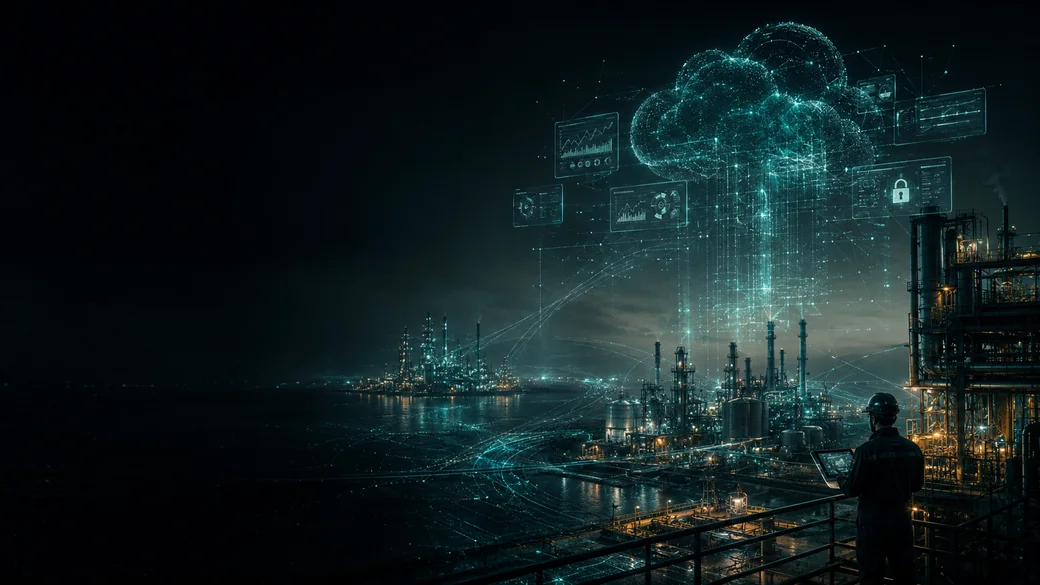
Industrial sites connected through a secure cloud and hybrid architecture
02

Our Cloud Computing Services

The cloud service portfolio is organized into focused, accessible modules that can be explored independently.

Cloud Architecture Design

Every cloud project begins with selecting the right architecture.

We assess the existing systems, data sources, applications, communication infrastructure, cybersecurity requirements, and expected system growth.

Based on this assessment, we design an architecture that may include:

  • Public cloud services
  • Private cloud infrastructure
  • Local data centers
  • Edge-computing devices
  • Hybrid cloud environments
  • Secure communication gateways
  • Cloud databases
  • Application servers
  • Backup and recovery systems
  • User-access and identity-management services

The objective is to create an architecture that is reliable, manageable, and suitable for the organization’s actual operating environment.

Cloud Data Storage

Industrial and operational systems can generate large amounts of information over time.

We develop cloud-storage solutions for structured and unstructured data, including:

  • Real-time sensor data
  • Historical process data
  • Alarm and event records
  • Production information
  • Maintenance records
  • Images and technical documents
  • Energy-consumption data
  • Quality and laboratory records
  • Equipment-condition information
  • Reports and analytical results

Storage policies can be defined according to data importance, retention period, access frequency, and regulatory requirements.

The system can also include automated backup, data archiving, and recovery functions.

Cloud Databases

Cloud databases provide scalable storage for applications, dashboards, analytical platforms, and connected industrial systems.

Depending on the project, we can work with:

  • Relational databases
  • Time-series databases
  • NoSQL databases
  • Data warehouses
  • Data lakes
  • Document-storage systems
  • Analytical databases

The database structure is designed around the type of data, required query speed, expected data volume, and application requirements.

A properly designed database makes information easier to retrieve, analyze, and integrate with other systems.

Cloud-Based Monitoring and Dashboards

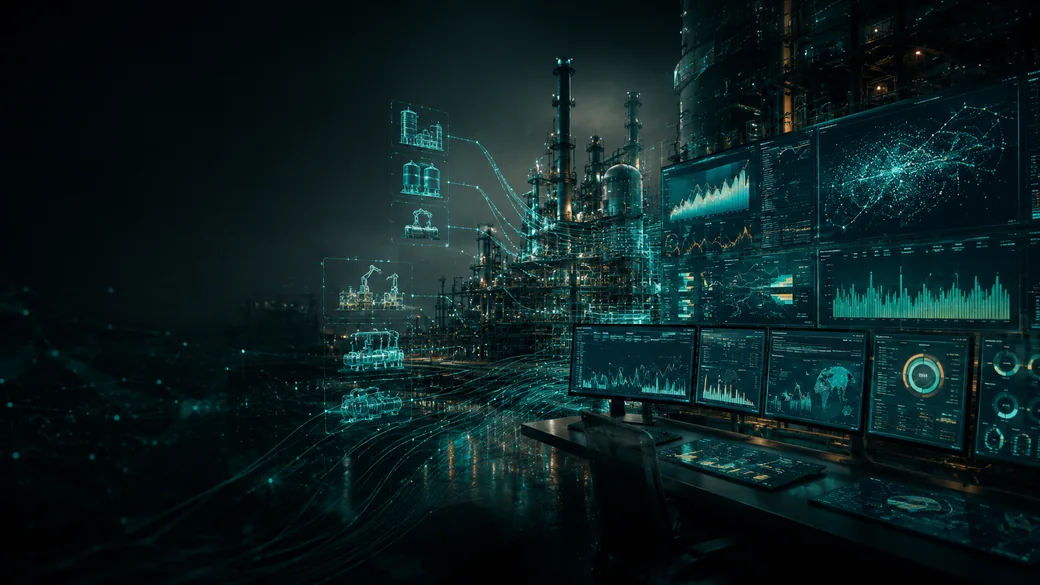
We develop cloud-based monitoring platforms that allow users to access operational information from authorized locations and devices.

Dashboards may display:

  • Real-time operating values
  • Historical trends
  • Equipment status
  • Production figures
  • Energy consumption
  • Alarms and events
  • Maintenance indicators
  • Key performance indicators
  • Multi-site comparisons
  • Reports and analytical results

Access permissions can be defined for different users, including operators, engineers, maintenance teams, managers, customers, and external service providers.

The interface can be designed for desktop computers, tablets, and mobile devices.

Cloud Application Development

We develop web-based and cloud applications for industrial and business requirements.

These applications may be used for:

  • Equipment and process monitoring
  • Maintenance management
  • Energy management
  • Production reporting
  • Asset tracking
  • Technical documentation
  • Project information management
  • Data analysis
  • Remote technical support
  • Customer portals
  • Digital Twin applications
  • Multi-site operation management

Applications can be developed as standalone systems or integrated with existing industrial and enterprise platforms.

Integration with Industrial Systems

Cloud platforms become more useful when they can exchange information with existing industrial systems.

We design interfaces that connect cloud applications to:

  • PLC systems
  • DCS platforms
  • SCADA systems
  • Industrial historians
  • IoT and IIoT gateways
  • Sensors and field devices
  • Condition-monitoring systems
  • Energy meters
  • Local databases
  • Maintenance-management systems
  • ERP platforms
  • Enterprise applications

Data can be transferred continuously, periodically, or when specific events occur.

Where direct cloud communication is not suitable, an edge gateway or local server can act as an intermediate layer.

Cloud Analytics and Artificial Intelligence

Cloud platforms can provide the computing power required for advanced data processing, machine learning, simulation, and artificial intelligence.

Cloud-based analytics can support:

  • Historical trend analysis
  • Anomaly detection
  • Predictive maintenance
  • Demand forecasting
  • Production analysis
  • Energy optimization
  • Equipment-performance assessment
  • Quality prediction
  • Failure-risk estimation
  • Multi-site comparison
  • Digital Twin calculations

Analytical models may run directly in the cloud or through a hybrid architecture where critical calculations remain local.

Backup and Disaster Recovery

Data availability is an important part of any digital platform.

We design backup and recovery solutions to reduce the risk of data loss and help systems return to operation after hardware failure, software problems, cybersecurity incidents, or other interruptions.

Depending on project requirements, the solution may include:

  • Automated backups
  • Scheduled data replication
  • Versioned storage
  • Off-site backup
  • Redundant databases
  • System snapshots
  • Recovery procedures
  • Application restoration
  • Backup-health monitoring
  • Disaster-recovery planning

The required recovery time and acceptable data-loss level are defined during the design stage.

03

Public, Private, and Hybrid Cloud

Different organizations have different requirements for security, control, cost, and flexibility.

Public Cloud

Public cloud platforms provide scalable computing, storage, databases, and software services through shared infrastructure.

They are suitable for applications that require rapid deployment, flexible capacity, remote access, and scalable processing.

Private Cloud

A private cloud is dedicated to one organization and can be located within the company’s own infrastructure or hosted by a service provider.

This approach offers greater control over data, applications, access policies, and system configuration.

Hybrid Cloud

A hybrid cloud combines local or private infrastructure with public cloud services.

Critical operational functions and sensitive data can remain inside the site, while selected information is transferred to the cloud for monitoring, storage, reporting, or advanced analysis.

For many industrial applications, the hybrid approach provides a practical balance between security, performance, and flexibility.

04

Local, Edge, and Cloud Working Together

Cloud computing does not always replace local systems.

In many industrial projects, the best architecture includes several layers:

  1. Local Control Layer

    PLCs, DCS systems, and local controllers continue to manage critical operations.

  2. Edge Layer

    Gateways and edge computers collect, filter, process, and temporarily store data close to the equipment.

  3. Cloud Layer

    Selected data is transferred to the cloud for centralized storage, remote access, analytics, reporting, and application services.

    This layered structure helps reduce dependence on internet availability while still providing the benefits of cloud technology.

Security and Access Management

Cloud systems must be designed with security as a core requirement.

Depending on the project, our approach may include:

  • Secure communication
  • Data encryption
  • User authentication
  • Multi-factor authentication
  • Role-based access control
  • Network separation
  • Firewall configuration
  • Audit logs
  • Secure API design
  • Backup and recovery
  • Communication-health monitoring
  • Data-retention policies
  • Integration with existing cybersecurity requirements

Access can be limited according to user role, location, device, project, or data type.

Industrial control functions should remain protected from unnecessary external access, and cloud connectivity should be designed without compromising the safety and reliability of the operational environment.

05

Scalability and Future Expansion

One of the main advantages of cloud computing is the ability to expand the system as requirements grow.

A project may begin with one machine, one production line, or one industrial site. The same platform can later be expanded to support:

  • Additional equipment
  • More sensors
  • New users
  • Multiple sites
  • Larger databases
  • New dashboards
  • Advanced analytics
  • Artificial intelligence
  • Digital Twin applications
  • Customer and supplier access
  • Integration with enterprise software

We design the system architecture with future development in mind, so expansion does not require rebuilding the entire platform.

Remote access, multi-site coordination and scalable industrial data services
06

Applications Across Industries

Our cloud-computing solutions can be developed for different sectors, including:

  • Oil and gas
  • Power generation
  • Mining and drilling
  • Metal and manufacturing industries
  • Process industries
  • Packaging and production lines
  • Water and wastewater
  • Utilities and infrastructure
  • Buildings and facilities
  • Transportation and logistics
  • Renewable-energy systems

Typical applications include:

  • Remote monitoring
  • Centralized operational dashboards
  • Multi-site data management
  • Energy monitoring
  • Production reporting
  • Asset-performance analysis
  • Maintenance data management
  • Digital Twin platforms
  • Predictive analytics
  • Technical-document management
  • Customer-service platforms
  • Automated reporting
  • Backup and disaster recovery
07

Our Implementation Approach

Every cloud project begins with an assessment of the existing infrastructure and expected outcomes.

Our typical workflow includes:

  1. 01

    Reviewing the current systems, applications, and data sources

  2. 02

    Defining technical, operational, and business requirements

  3. 03

    Evaluating cybersecurity and data-governance requirements

  4. 04

    Selecting the appropriate local, edge, cloud, or hybrid architecture

  5. 05

    Designing databases, communication interfaces, and applications

  6. 06

    Developing and configuring the required platform

  7. 07

    Integrating the solution with existing industrial and enterprise systems

  8. 08

    Testing performance, security, and reliability

  9. 09

    Deploying the system and training users

  10. 10

    Providing support, maintenance, and future expansion

The final solution may include cloud databases, dashboards, web applications, analytical services, remote-access platforms, backup systems, and integration with existing software and control infrastructure.

Industrial sites connected through secure cloud and hybrid infrastructure

Building a Flexible Digital Environment

Cloud computing gives organizations the flexibility to access information, run applications, and scale digital services without depending entirely on fixed local infrastructure.

However, successful cloud implementation requires more than selecting a cloud provider. The architecture must match the actual operational, technical, and security requirements of the organization.

By combining cloud technology with industrial automation, IoT, edge computing, software development, databases, data analytics, and engineering knowledge, we create practical cloud solutions that support connected, scalable, and data-driven operations.

Cloud Computing

Discuss the technical and operational requirements of your project.

Contact Us

Start a conversation

Let’s build the next industrial solution.

Tell us about your project requirements, operational goals or engineering challenges.